


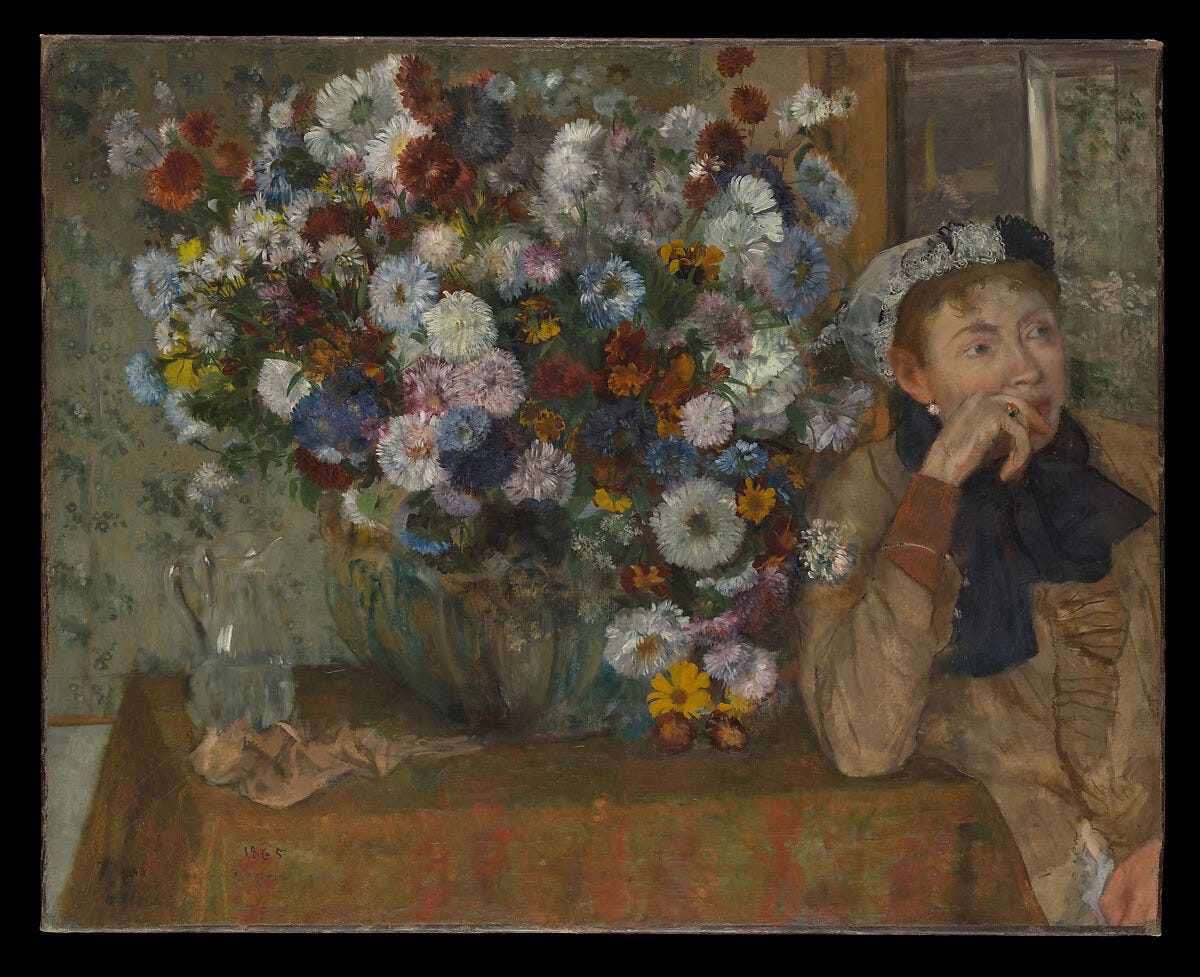
At a dinner last winter, the person next to me leaned in, warm, almost tender, and said in a voice meant only for me, “Between us, I don’t think she really belongs in this group.” The centerpiece was too tall and we had been tilting around it all night to see each other. I remember that for half a second, before anything else arrived, I felt the little electric lift of being picked, of finding myself suddenly inside the velvet rope. The shame came later, the way it does.
I have thought about that half second more than I would like to admit, because it finally handed me a word for a kind of person I had been watching for years without ever quite naming.
You have probably met one. Not the lonely figure at the edge of the party but the opposite, the one at the center of it, genuinely good with people, whose circle never stops widening. Every season brings new names, folded in, hugged hello, made to feel chosen. From the outside it can look like a kindness to everyone, one person warm enough to gather a whole community into a single room.
But gathering people is not the same as loving them, and beneath all that warmth there is a ledger. The hands that pull you in are the same ones that decide, later, who stays close and who gets eased toward the edge. It happens in small print. A cooler hello. An inside joke you are suddenly not told. A dinner you only hear about afterward, from someone who assumed you had been there.
Collecting and gatekeeping turn out to be one gesture, because the only way to own who is inside is to keep ruling on who is not, and a community that should be a single piece of cloth begins to come apart, thread-by-thread.
A few weeks after that dinner, a friend called me. She was working to sound light about it. She wanted to know whether she had done something wrong, because there had been a gathering she was not asked to, a coolness she could not place, a door that had shut without anyone admitting it was a door. “I’m sure I’m imagining it,” she said, and laughed, and then she was quiet, and we both sat there knowing she was not imagining it. I had nothing useful to say. I still don’t.
My tradition has an old, heavy word for what was moving underneath all of this. Fitna. It does not come over cleanly into English, but it points at something like discord, the deliberate stirring of division between people, and Islam takes it more seriously than a long list of sins we are quicker to name.
There is a teaching I keep returning to, that mending what has broken between two people is worth more than years of prayer and fasting, and that the opposite, letting it fester, turning people against each other, is the thing that shaves away your faith the way a blade takes hair. We are warned, again and again, about the one who carries words from house-to-house, who keeps one face for you and another for the person they are quietly turning you against. The warnings are severe because the damage is so soft-footed. You almost never see it as it happens. You see, much later, that the room has split.
Arthur Brooks has a plainer vocabulary for one corner of this. There are real friends, he says, and there are deal friends.
Deal friends are the ones the friendship is secretly for something, even when that something is just the pleasant hum of being well-connected.
Real friends are useless. They do nothing for you but love you.
The person who collects and divides has, in an awful way, mastered the deal friend, turned people into a kind of currency to be gathered and, when it serves, spent.
There is a line in the Qur’an that says on the day that finally matters, friends will become enemies to one another, every last one of them, except those who loved each other for the sake of God. I once read that as being only about the next world. I think now it describes this one just as well. Love someone for what they give you, and the friendship is already half an enemy. It just hasn’t shown it yet.
I could stop here, with one villain and a circle of victims, and it would feel righteous and clean. It would also be false. There is always that half second at the dinner. The pull. Before the shame, there was the flush of being chosen. Part of me wanted in.
Most of us are not the collector. That tireless, dividing hunger is genuinely rare, and we ought to say so plainly rather than pretend everyone is a villain in waiting. But the seed of it is completely ordinary. I have felt it in the small, delicious piece of gossip that buys a little closeness with whoever I pass it to. I have felt it inside my best friendships, on an ordinary afternoon, being faintly transactional, or petty, or glad to have been chosen. We think we are the real ones. Mostly we are. And on the bad days we are keeping the collector’s ledger too, in smaller figures, under a gentler name.
The answer is not to grow suspicious of warm people, or to start auditing our friendships for purity, which is its own kind of cold. It is smaller than that, and harder. You feel the half second when it comes, and you do not move with it. You do not carry the sentence to the next person. You say, at the dinner, lightly, “Actually, I like her,” and you let it cost you a little standing. You try, in a room that has its dividers, to be one of the menders instead.
I never did call that friend back with anything wise. But I did one small thing. I asked her to dinner, no group, no gatekeeper, nobody to be inside or outside of. We talked for three hours. Somewhere in there, she stopped performing being fine, and I stopped performing having answers, and we were just two people who had been bruised by the same thing, telling each other the truth.
That is the thing all the collecting in the world cannot give you. One real table, a seat at it for anybody worn out from being sorted.