


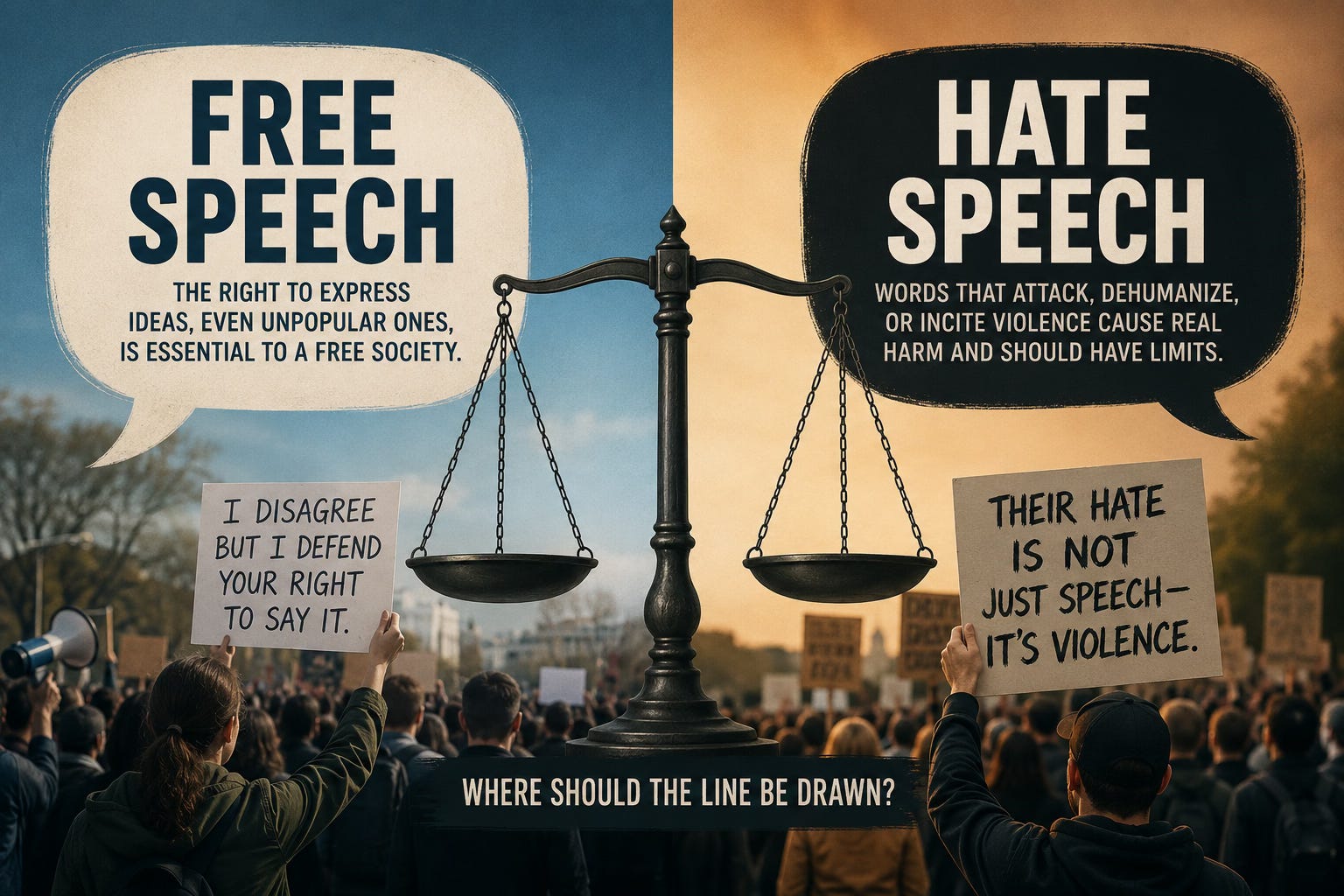
Watch this conversation between Nadine Strossen (NYLS, former ACLU president) and Jeremy Waldron (NYU). It opens with both scholars agreeing that “hate speech” is not a legal term of art in the US and is often used loosely to denounce whatever ideas the speaker dislikes.
A few questions I want you to reflect on:
Strossen argues existing First Amendment exceptions (true threats, incitement, harassment) already cover the genuine harms of hate speech, making new laws unnecessary. Waldron argues the effect of speech on a community’s atmosphere is itself worth legislating against, even short of those emergencies. Which framework do you find more persuasive, and why?
Strossen’s central worry is that hate speech laws get turned against the minorities they’re meant to protect. Waldron doesn’t dispute the historical examples, but still thinks it’s a reasonable task for legislators. Is Strossen’s argument that this always happens enough to rule out the possibility of doing it well, or is it a warning about implementation rather than principle?
Waldron draws a distinction between society at large and the campus specifically — a place both for free inquiry and for protecting vulnerable students. Do you think that distinction actually changes the analysis, or is Strossen right that the same principles should apply regardless of setting?
On group libel: is there a meaningful difference between suing someone for falsely calling you a criminal and suing someone for falsely smearing your entire racial or religious group as criminals? Why does the law currently treat these so differently?
Both speakers agree hate speech can cause real harm and that discrimination is a serious problem — they only disagree on the remedy. After watching, do you think this is mainly a disagreement about values, or mainly a disagreement about empirical predictions (i.e., what actually works)?