


Friday afternoon, 1:10 p.m. The oncology ward smells of disinfectant and flowers left too long in water. Shabbir’s hand curls around the brass bell and for a moment, neither of us moves. The metal is warm from the sun slanting through tall windows, warm from all the hope it has carried.
For months, Shabbir sat in his small infusion room, tethered to IV lines, listening as the bell rang out in the hallway. Through the thin walls, he could hear the cheers of families, the muffled sobs that always accompanied release. He imagined their faces, studied their voices the way an anthropologist studies artifacts, searching for clues to what finishing might feel like.
Now it is our turn, and the moment feels both enormous and anticlimactic, like reaching a summit only to find the view hidden in clouds.
He pulls the rope. The sound cuts through the ward, and the nurses—so often focused on vitals glowing on iPads and computers—pause to clap and cheer. Their applause rises above the steady hum of machines keeping others alive. Sharp and final, the bell declares what we can hardly believe: we are no longer patients.
“That’s it,” the nurse says, her smile genuine but practiced. “You’re done.”
Done. The word rattles in my head like a marble in an empty jar. After months of living appointment to appointment, pill to pill, number to number, the absence of “next time” feels disorienting. Like finishing a book you never wanted to read but couldn’t put down, only to discover you’ve forgotten how to live without its gravity.
We gather the detritus of survival: color-coded pill organizers, the thermometer that became an extension of my hand. The car fills with leftover supplies and discharge papers, the archaeology of crisis. We point toward New Jersey, toward Shabbir’s sister’s house, toward normal people doing normal things.
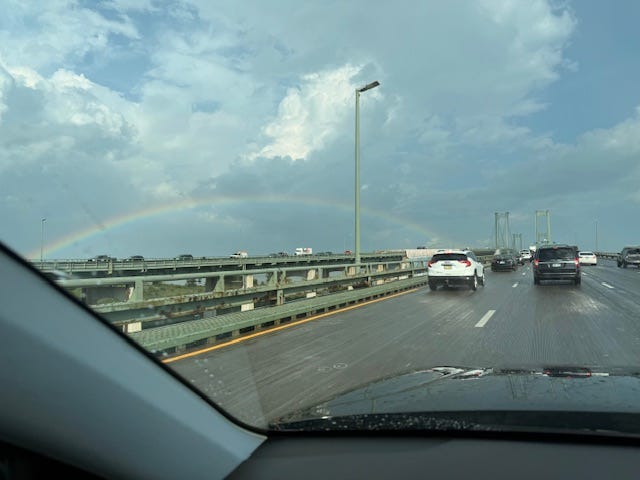
An hour into the drive, drizzle swells into downpour, the kind that turns windshields into waterfalls. But we keep going, because we are done waiting. Then the sun breaks through. A rainbow stretches across the entire sky, vivid as if painted with liquid light. It arcs from the industrial landscape behind us to the New Jersey suburbs ahead, toward graduation parties and family chaos. We drive straight into it, as if we might pass through and emerge transformed.
“Well,” Shabbir says. That’s all, but I hear everything in it—relief, recognition, gratitude. The universe has offered a metaphor too precise to ignore. Sometimes the ordinary physics of water and light conspire to create a bridge just when you need one.
What Nobody Tells You About Finishing
The glossy survivor pamphlets don’t say this: the end doesn’t feel like an end. It feels like a waiting room between who you were and who you are becoming. Not sick anymore, but not quite well either. No ritual exists for the transition back from patient to person. You leave with discharge papers thick as a novella and a pharmacy’s worth of rattling bottles. You’re told to “take it easy,” as if easy were a place you could simply decide to visit.
A few days ago, they removed Shabbir’s central line. For months, it was his lifeline, the portal through which medicine kept him alive. Now it’s gone, replaced by a small scar. He takes multiple showers a day, reveling in the freedom of water without plastic wrap. But the instructions are clear: recovery takes a year. His new immune system—Zaynab’s generous gift, a biological love letter—must learn to recognize self from other, to settle in and defend.
Before is gone. The man who once planned summers around conferences now knows the taste of neutropenia, the meaning of engraftment. He has watched his daughter save his life with casual heroism. Crisis forced clarity: survive today. Tomorrow could wait. But “done” is messier. It means rebuilding around fragility, managing a dozen medications with contradictory warnings, relearning the difference between recovery and remission.
And it means facing others’ expectations. Friends and relatives expect relief, gratitude, readiness to return to normal. Some days we do feel those things. But we have been speaking another language for too long; ordinary conversation now feels foreign.
“How was your summer?” The question hovers, impossible to answer without either lying or saying too much.
The Arithmetic of Ordinary Days
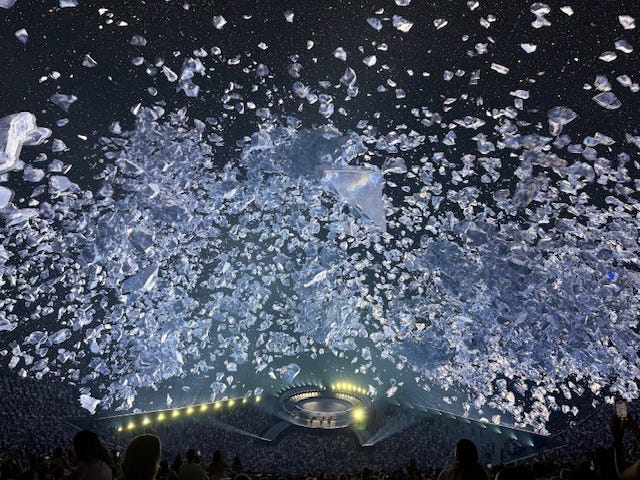
Last weekend, I escaped—for the first time all summer. In Las Vegas, improbable city of light, the Backstreet Boys sang inside the Sphere. Stars exploded across its curved ceiling in impossible constellations, and for ninety minutes I was transported, vibrating with joy in a crowd of fifteen thousand. A version of myself I thought I’d lost resurfaced, singing along, untouched by medical vocabulary.
In Vegas, wonder felt like something borrowed, brief and personal. A week later, it arrived again, this time stretched across the sky, large enough to hold all of us. The rainbow lasted three minutes before dissolving back into gray. But in those minutes, it felt like a handoff, from the family who survived crisis to the family who must now learn to navigate its absence.
Zaynab, two months past her stem cell donation, is packing for college, arguing about dorm room décor and orientation events. Her story carries on. Eesa surprised us with quiet competence, emptying trash, tidying apartments, knowing when to vanish and when to be present. Now he returns to video games and sleepovers, though with a protective awareness in his gaze. Our children are experts now in the fragility of parents. And Mikael, the youngest, keeps asking when Daddy will be “all the way better.” It is a fair question without a simple answer.
The Strange Physics of Moving Forward
The drive to New Jersey should have felt like triumph, but instead it felt like the ache after holding your breath too long. For months, time was measured in precise medical units—fractions of blood counts, hours between pills, survival percentages. Now time has to be relearned in civilian form: vacations, bedtime, silence without vigilance. It is like learning to walk in a world where gravity has shifted.
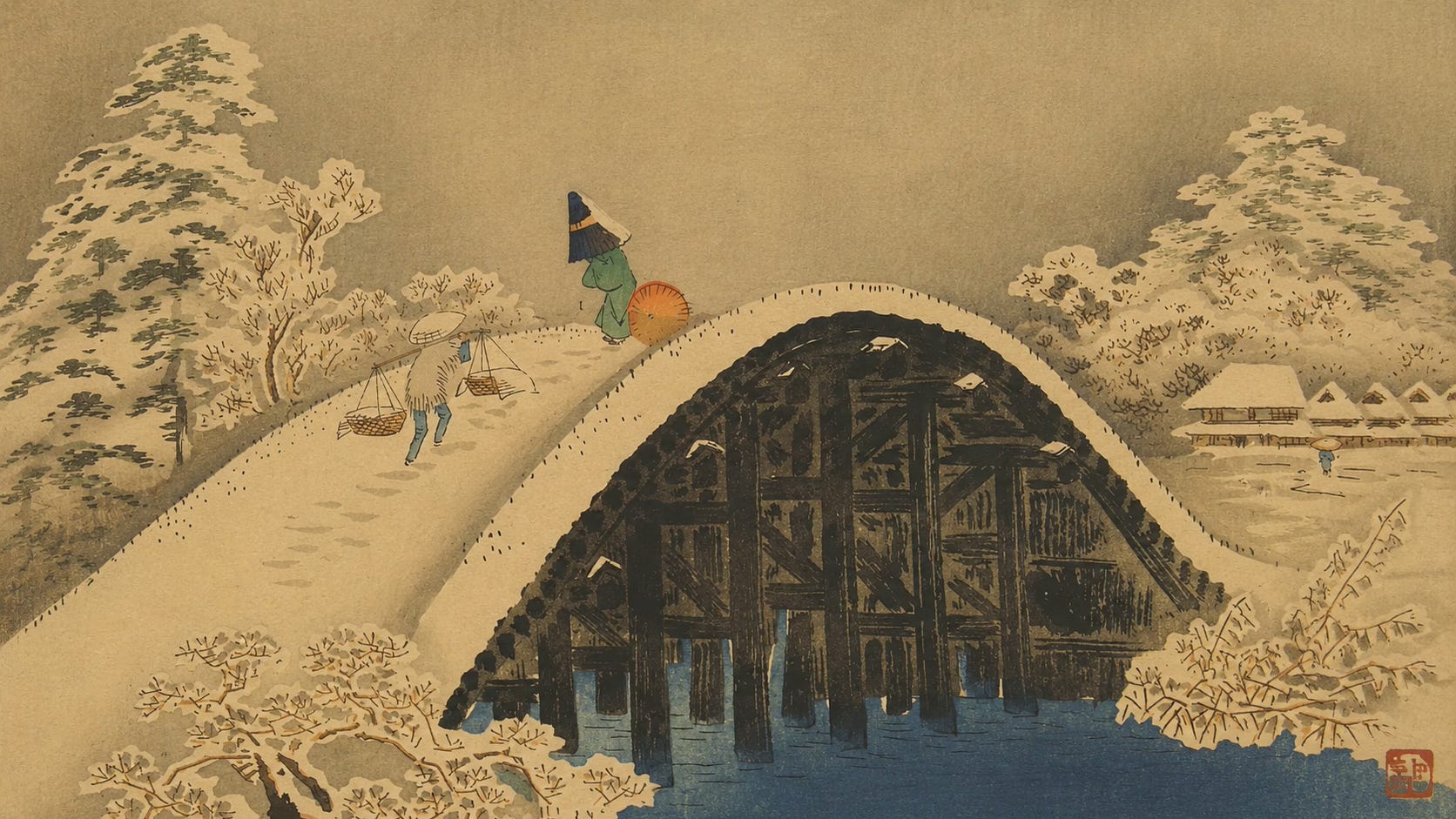
The rainbow reminded us: bridges don’t carry you; you must walk them, step-by-step, trusting the unseen foundations.
After the Threshold
Saturday morning, Shabbir’s sister’s house buzzes with celebration. One nephew graduating high school, another heading to med school. Beginnings everywhere: graduation caps and discharge papers, congratulations cards and new plans. Relatives who asked, “How is he?” now ask, “What’s next?” The question feels lighter, carrying possibility instead of dread.
Children race through the yard, oblivious to yesterday’s milestone. The world spun on while we survived. Now we rejoin it, not as spectators but as participants. Rejoining isn’t the same as returning, because something has shifted, some recalibration of what matters.
Tonight, we drive home. The house will smell familiar but feel altered, because we are altered. We survived something we thought might break us.
Now what?