


I spend a lot of my working life in rooms with people who disagree about religion. The disagreements I expect rarely surprise me. The moments that stay with me usually come when people agree.
A conservative Christian and a progressive Jewish leader are discussing a religious liberty case, and both think the government overreached. For a few minutes, the room feels unusually warm. Then someone asks why. One sees religious freedom as protecting traditional religious communities against a hostile culture. The other sees it as protecting minorities from majorities, including Christian ones. They’ve reached the same conclusion from opposite directions.
I’ve watched versions of this exchange play out many times. Religious conservatives grow quieter when the claimant belongs to an unfamiliar tradition. Religious progressives struggle when the practice needing protection is one they find objectionable.
This week brought those tensions to mind. Following Tuesday’s elections, a flurry of coverage announced the return of the religious left. Religion News Service declared, “On Election night, the religious left is back.”
But what exactly is the religious left? Where has it been? And is progressive politics prepared to make room for religion when religion produces uncomfortable answers?
The religious left never left
On Tuesday, James Talarico, a Presbyterian seminarian, became the first Democrat to win a Senate seat in Texas since 1988. United Methodist pastor Adam Hamilton became the first Democrat Kansas has elected to the Senate since 1932. And Abdul El-Sayed became the first Muslim ever elected to the Senate. Religious progressives, of course, have a long history in American politics.
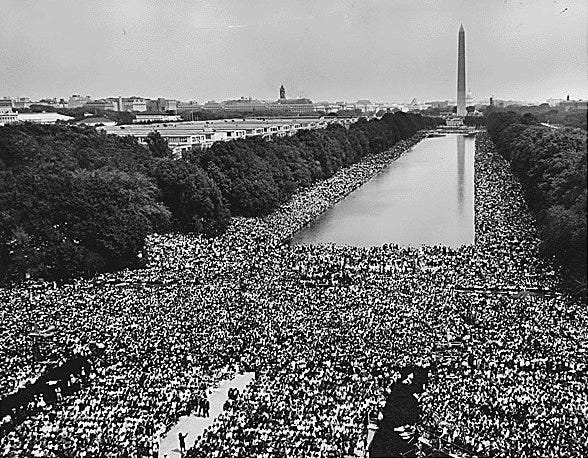
Nineteenth-century abolitionists drew on Christian teaching to condemn slavery. Social Gospel reformers connected religious obligation to poverty and economic inequality. The civil rights movement was deeply rooted in Black churches, with Jewish leaders and organizations playing important roles. Religious communities later helped shelter Central American refugees during the sanctuary movement.
Beginning in the late 1970s, organizations like the Moral Majority helped make conservative Christianity synonymous with religion in American politics. Eventually, “religious voter” came to mean a conservative Christian voter. The religious left didn’t disappear, but it did get much harder to see.
Who belongs to the religious left?
We tend to imagine the religious left as a mirror image of the religious right, with the same kind of faith attached to different political positions. That picture is too tidy.
Consider Catholics. Two Catholics can share the Church’s teaching on the sanctity of life yet reach opposite conclusions about abortion legislation. They can agree on religious freedom and disagree about exemptions from contraception mandates. These fights reflect competing understandings of what it means to take religion seriously and what doing so requires.
Muslim Americans present similar complexities. Some embrace progressive positions on immigration, economic justice, and racial equality while maintaining traditional views on sexuality and gender. Others understand their faith as supporting a broader range of progressive positions. Someone can be economically progressive, socially conservative, deeply devout, and committed to religious pluralism all at once. Where does that person belong?
The religious left can describe a political coalition of religious people supporting progressive causes. It can also describe a theological movement whose interpretations of religion are themselves progressive. Electing religious progressives tells us something about the coalition. It tells us much less about the theology.
Why now?
Part of the renewed attention reflects conservative Christianity’s close association with Donald Trump. Religious progressives are increasingly challenging the assumption that conservatives speak for Christianity.
Talarico, for example, uses scripture and Christian teaching to challenge conservative political positions. He treats religious argument as a legitimate part of political debate and denies conservatives a monopoly on interpreting it.
Democrats have also struggled with the perception that their party is uncomfortable with religion. Yet millions of religious Americans hold progressive political commitments. Candidates who speak openly about faith may be reaching voters whose religion has always shaped their politics. Of course, one election tells us little about whether these candidates’ religious identities contributed to their victories or whether their success will translate into a lasting movement.
Can the left make room for religion?
In many progressive spaces I’ve encountered, religious voices are welcomed when they support immigration reform, racial justice, or economic equality. The friction begins when religious commitments lead somewhere the coalition doesn’t want to go.
And yet, progressive politics may be increasingly welcoming of religious people, even as it continues to struggle with the place of religion itself. Taking religion seriously as an independent source of moral authority requires engaging with convictions that may challenge positions the left already holds.
I see this regularly in conversations about religious freedom. Progressives readily emphasize protecting religious minorities. The mood changes when the claimant is a conservative Christian objecting to participation in a same-sex wedding, or a Muslim institution maintaining traditional teachings on sexuality.
These are difficult questions. Respecting religion doesn’t mean granting every religious exemption, and people can disagree in good faith about where religious liberty ends and other legal protections begin. The deeper question is whether our commitment to religious freedom holds when we disagree with the underlying belief. Religious conservatives face the same challenge when they vigorously defend Christian institutions while showing less concern for Muslim or other minority faiths. Pluralism asks us to take religious difference seriously, including when it produces outcomes we strongly reject.
What comes next?
The religious left has longstanding organizations, though building a durable political coalition requires shared priorities and institutions capable of sustaining them. Catholics and evangelical Protestants disagree on fundamental theological questions yet built a powerful alliance around abortion and religious liberty.
Can the religious left develop a comparable coalition? Economic justice might provide common ground. A shared commitment to religious pluralism might offer another foundation, though it would require members to confront some uncomfortable disagreements.
The religious left also has an opportunity to challenge the assumption that pluralism requires religion to retreat from public life. Government neutrality is essential in a religiously diverse society. Religious citizens remain free to bring their convictions into political debate. The Establishment Clause limits what government can do, not what citizens can argue.
I don’t know whether this week’s elections mark the beginning of a lasting religious-left resurgence. Religious progressives are gaining visibility, and the political conversation around faith may be changing.
In those rooms, people keep discovering unexpected allies and equally unexpected disagreements, and learning how little someone’s politics tells us about what they believe. The religious left will have to decide whether it is making room for religion, or only for the versions of religion it already agrees with. That question belongs to anyone who takes pluralism seriously.