


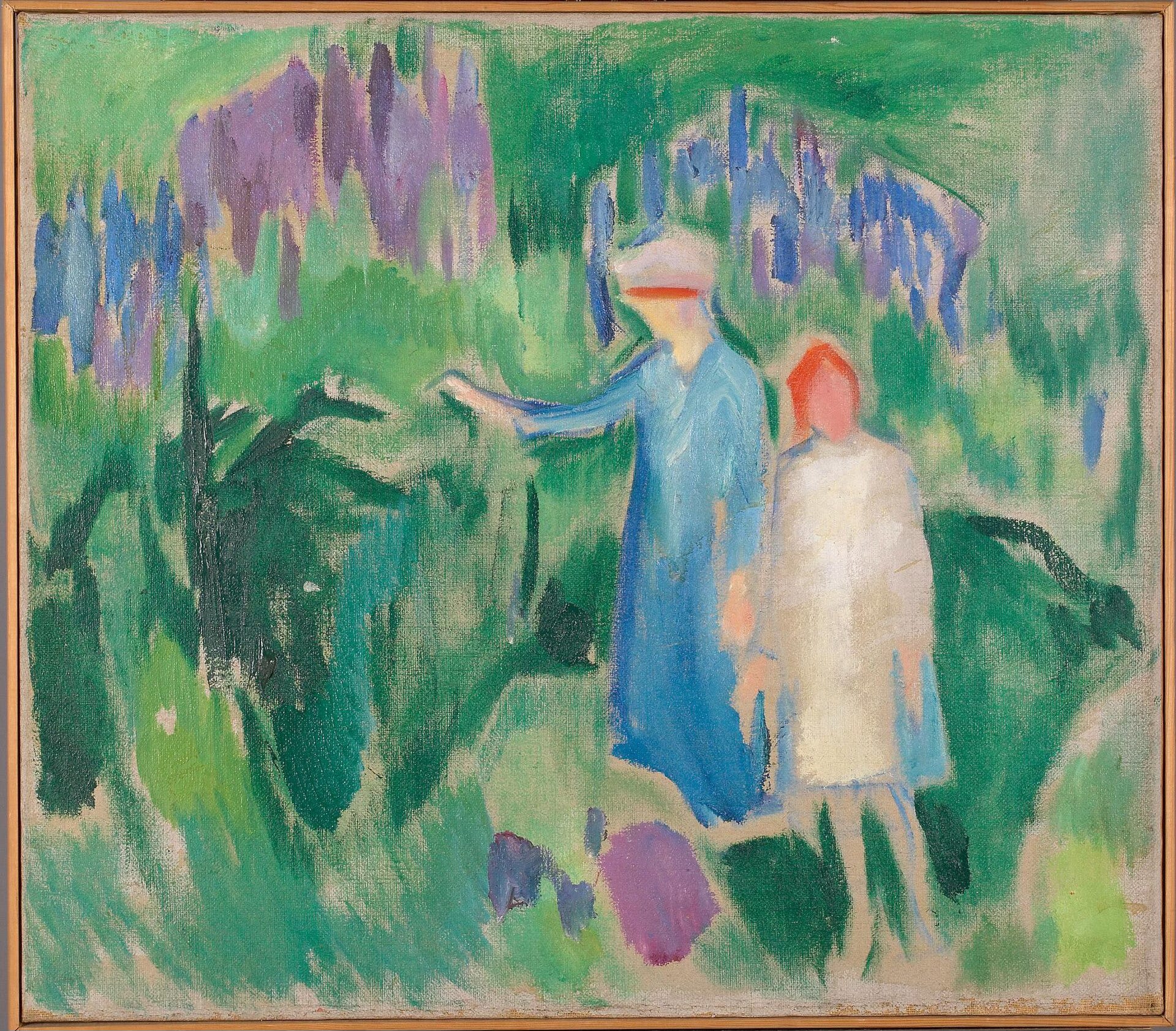
Some days I miss her, and she’s still in the room—a phantom ache that settles in my chest like grief for someone who hasn’t left yet, who may never leave, but who feels impossibly distant even as she breathes the same recycled apartment air.
Zaynab, my eighteen-year-old daughter, carries contradictions in her newly adult body the way I carry mine in my forty-something one. She’s the girl who offered her bone marrow to save her father’s life without hesitation, who can make our temporary Baltimore apartment feel briefly like home with her easy laughter echoing off unfamiliar walls. She’s also the one who can trigger in me a rage so immediate and molten it surprises us both—a fury that rises from some primal place where love and frustration tangle until I can’t tell where protection ends and exasperation begins.
The contradiction lives in my body now, a constant tension between the mother who wants to hold her close and the one who sometimes wants to shake her until she understands that while this isn’t forever, right now we need all hands on deck.
We’ve spent these months in Baltimore for Shabbir’s cancer treatment—a finite sentence with a good prognosis, treatment that will wrap up by the end of summer and return us to our real lives. But temporary doesn’t mean easy. Our lives are compressed into a two-bedroom apartment that smells faintly of disinfectant and someone else’s cooking, where my eight-year-old heads to camp each morning with the resilience that only small children possess, where my thirteen-year-old has become my unexpected ally—throwing out vomit bags without flinching, keeping the apartment tidy, offering his broadening shoulders as support when his dad walks from car to door, joking easily in a way that makes Shabbir’s eyes crinkle with something that isn’t pain.
But Zaynab exists in her own orbit, helping here and there when asked but mostly floating through our crisis like a visitor passing through someone else’s emergency. Most weekends, she escapes back to Potomac where her real life waits—graduation parties where she can be eighteen and unencumbered, sleepovers where she can forget the sound of retching through thin walls, concerts where the music drowns out the medical terminology that has become our temporary vocabulary. This week she’s asking for even more days away, and I can feel her need like a physical pull, the way a plant turns toward light.
We’ve said yes again and again, not because we aren’t stretched thin as wire, but because we want her to live—to be eighteen and free and focused on herself in the way eighteen-year-olds are supposed to be, to not have to carry the weight of our temporary upheaval on shoulders that should only know the burden of college applications and summer plans.
And yet. Yesterday, she asked for more.
The ask came while I was juggling the complex mathematics of short-term crisis: blending soft foods Shabbir could stomach in his treatment-ravaged state, coordinating my thirteen-year-old’s helpful energy with my eight-year-old’s camp schedule, managing the logistics of a life temporarily displaced while scrambling to meet a deadline because bills don’t pause for chemotherapy. The words tumbled out before I could catch them, sharp-edged and unforgiving.
“Now is not the time to be self-centered,” I said, and watched that word—self-centered—hit her like a physical blow.
She spun from the kitchen, sneakers squeaking against vinyl in a sound that will haunt me, voice cracking with a fury that seemed to come from her toes. The apartment felt too small to contain us both, the air too thick to breathe. We both cried—loud, messy tears that bounced off unfamiliar walls and settled into the cracks between us like salt in a wound. Then we retreated to opposite ends of the space, trying to breathe through what felt like drowning on dry land, each of us gasping for something the other couldn’t give.
She’s trying to make sense of a disruption that feels enormous even though we all know it’s temporary, where every choice ripples outward to touch her father’s treatments, my sanity, her siblings’ carefully maintained normalcy. I’m holding our family together through this finite but intense period with caffeine and the kind of desperate love that sometimes looks like anger because it has nowhere else to go.
When illness temporarily enters a household, everything sharpens to a point that cuts. Eighteen-year-olds who should be thinking about college and independence are instead confronted with their parents’ mortality, their family’s fragility. They swing between wanting to help and needing to escape, between guilt over their normalcy and resentment at being needed, between the child who still wants to be taken care of and the adult who sees too clearly what’s being asked of them.
This morning, the switch flipped again. After a day of slammed doors and silence thick enough to choke on, she called out to me as “Mommy” and asked for Nutella on croissant bread, her voice soft and small like it used to be when she was six and the world’s biggest problem was whether her sandwich was cut into triangles or squares.
No apologies. Just a return, tentative and hopeful as dawn.
That night, once the apartment had settled into uneasy quiet punctuated only by Shabbir’s treatment-disrupted sleep, I scrolled the news with the desperate hunger of someone looking for distraction from their own temporarily upended life. That’s when I saw the story that wouldn’t let me go: the Camp Mystic flood in Texas.
Eighteen-year-old girls, trapped by rising waters, screaming as they clung to trees while rescue swimmers pulled 165 people to safety. But what pierced me wasn’t the water—it was imagining the parents getting that call. Your daughter is at camp, that sacred space of sunscreen and friendship bracelets, and suddenly you’re hearing words like “flash flood” and “helicopter rescue” and “we’re doing everything we can.”
One minute, you’re worried about sunscreen. The next, you’re praying she remembers how to swim.
The metaphor crystallized with brutal clarity: this is what we’re doing, too. Every day during this temporary crisis. Rescuing. Reaching. Holding on through rising waters that threaten to sweep us all away, even though we know the flood will recede.
In crisis, even temporary ones, we form human chains, holding each other even when we’re angry, refusing to let go even when holding on hurts. And sometimes, the ones we’re trying to save are the ones thrashing against our grip—not because they don’t love us, but because even short-term drowning makes you desperate, makes you fight the very hands trying to pull you to shore.
Some days, the rage sits just beneath my surface like a living thing, sharp and metallic, when she floats through our temporary chaos seemingly untouched while her younger brother empties vomit bags without complaint. The fury of loving someone so much while feeling invisible to them, the exhaustion of being both lifeline and ignored, the impossible weight of being needed by everyone except the one who should care most.
But then she says “Mommy” and asks for Nutella, and I remember: this is the return. Not the calm after the storm, but the tether—the love that keeps pulling us back to shore, even while we’re both still gasping for air, even while the temporary flood keeps rising around us.